
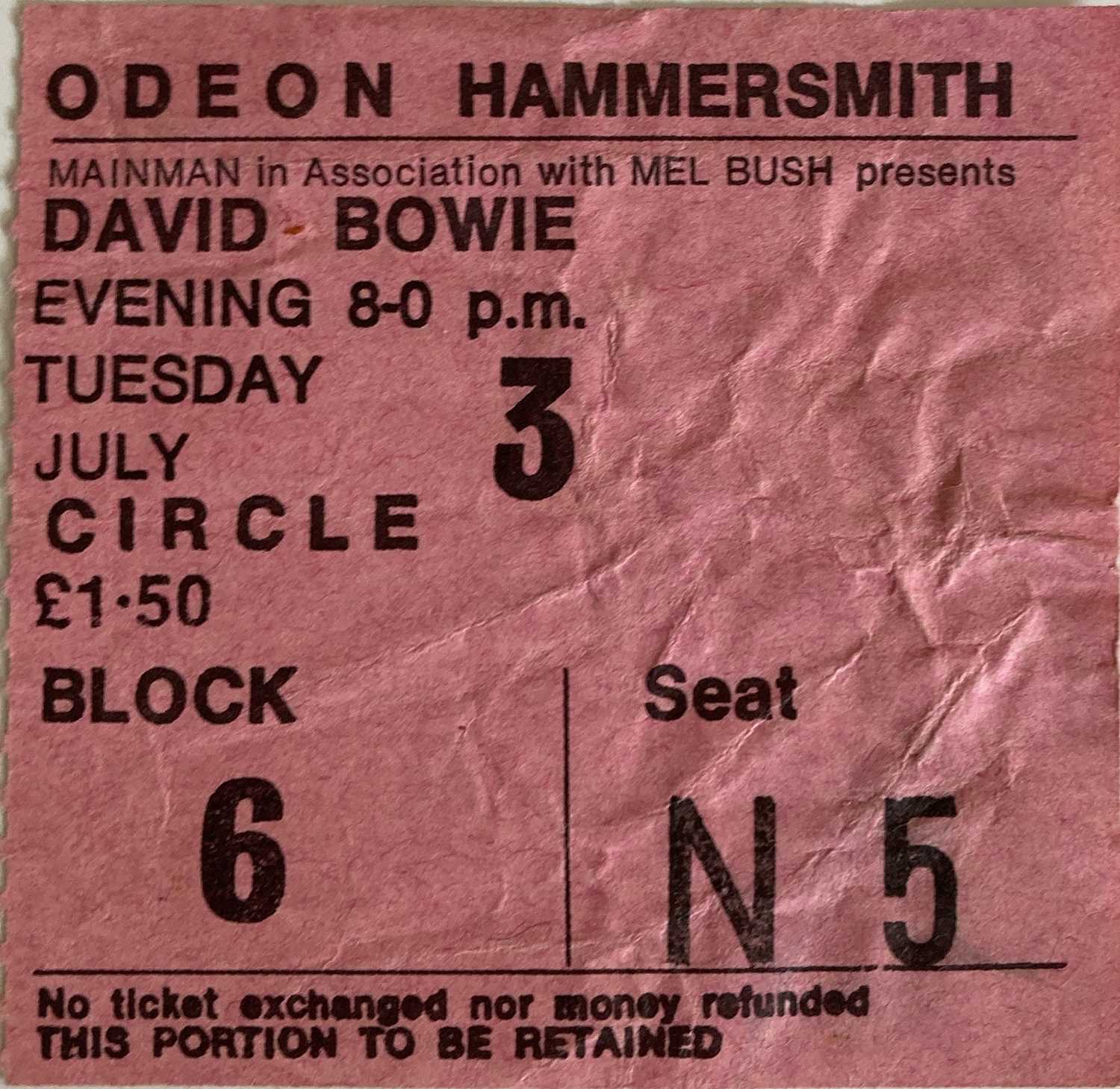
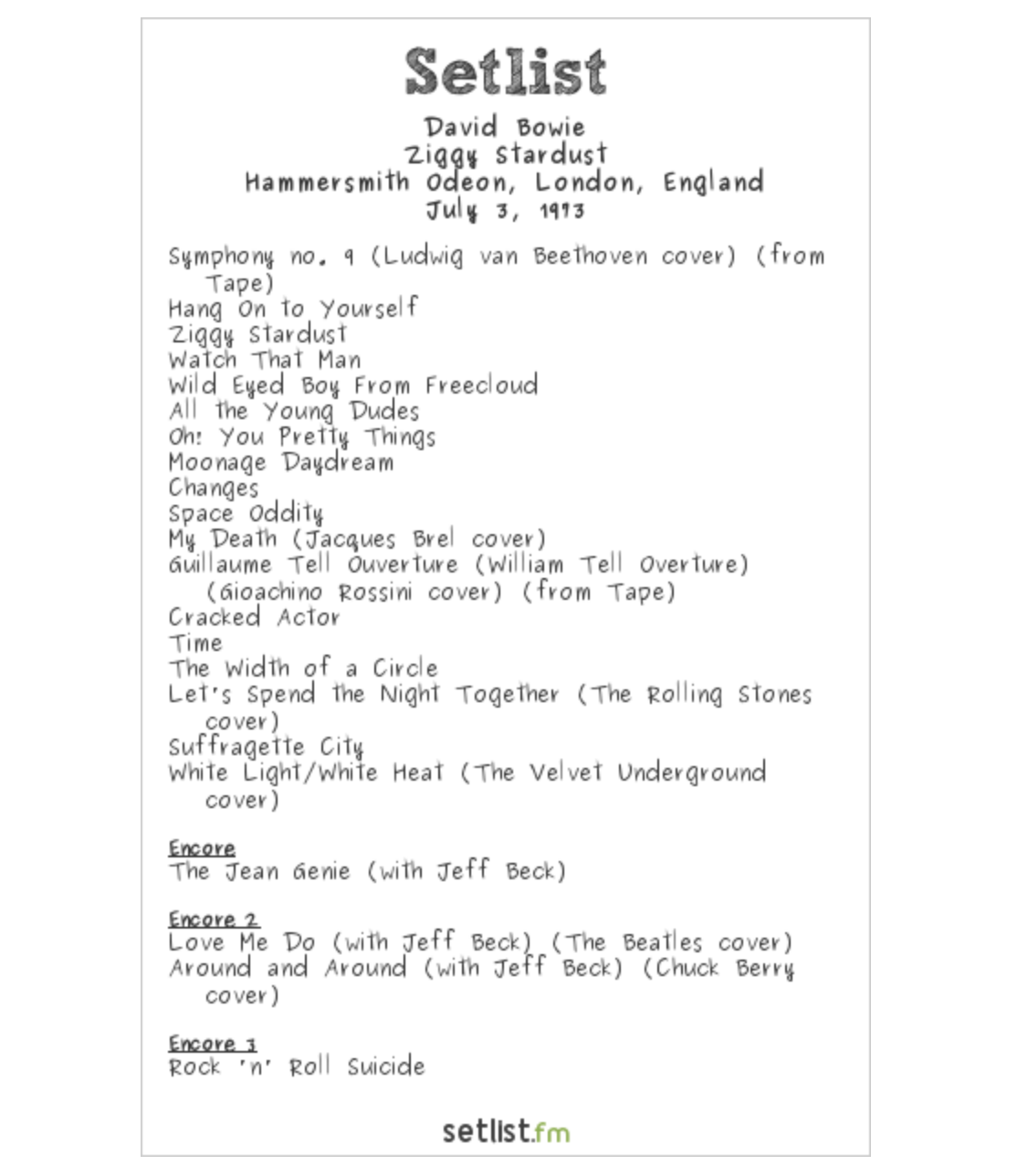
On July 3, 1973, after a year-and-a-half of criss-crossing around the globe, and 191 shows, the Ziggy Stardust Tour came to a climatic end.
David Bowie had put out a masterpiece, thanks in part to guitarist Mick Ronson, with the '72 recording of The Rise and Fall of Ziggy Stardust and the Spiders from Mars.
The subsequent tour was just as awe-inducing as one would think.
Bowie and the band went full glam with hair, makeup, glitter suits, and tall shoes. The Spiders from Mars were as tight as they were powerful, but Bowie was top of his game, embodying the protagonist of the rock opera / concept album.
How many Grammys did it garner? Zero. Nada. Zilch. The Grammys, for whatever reason, never rewarded the monumental talent for his music until 2017's Blackstar.
1973 was four years after the Summer of Love, but the Grammys still weren't with it. They had Gospel, Jazz, Pop, and Folk categories but no Rock.
Helen Reddy won that year for "I Am Woman" for Best Performance, Female, and Harry Nilsson was awarded a Grammy for "Without You" in the Male category; so where would the gender-bending Bowie fit in about his bisexual character Ziggy?
The correct answer is: out in the cold, starman.
It was "Starman" that got the ball rolling for the album and tour. In April '72, RCA released the only two singles it would print to support the record. The first, "Rock & Roll Suicide," would become the upbeat closer of the set.
But "Starman," after it was performed on Top of the Pops, heralded the album as something truly special and inspired a generation of soon-to-be-stars of their own.
“I immediately put on some of my older sister’s make-up,” The Cure's Robert Smith said of the performance, “I loved how odd it made me look, and the fact that it upset people. You put on eyeliner and people started screaming at you. How strange, and how marvelous.”
Another thing strange about the marvelous "Starman" was Bowie's relationship with it.
He didn't seem interested in playing it live very much.
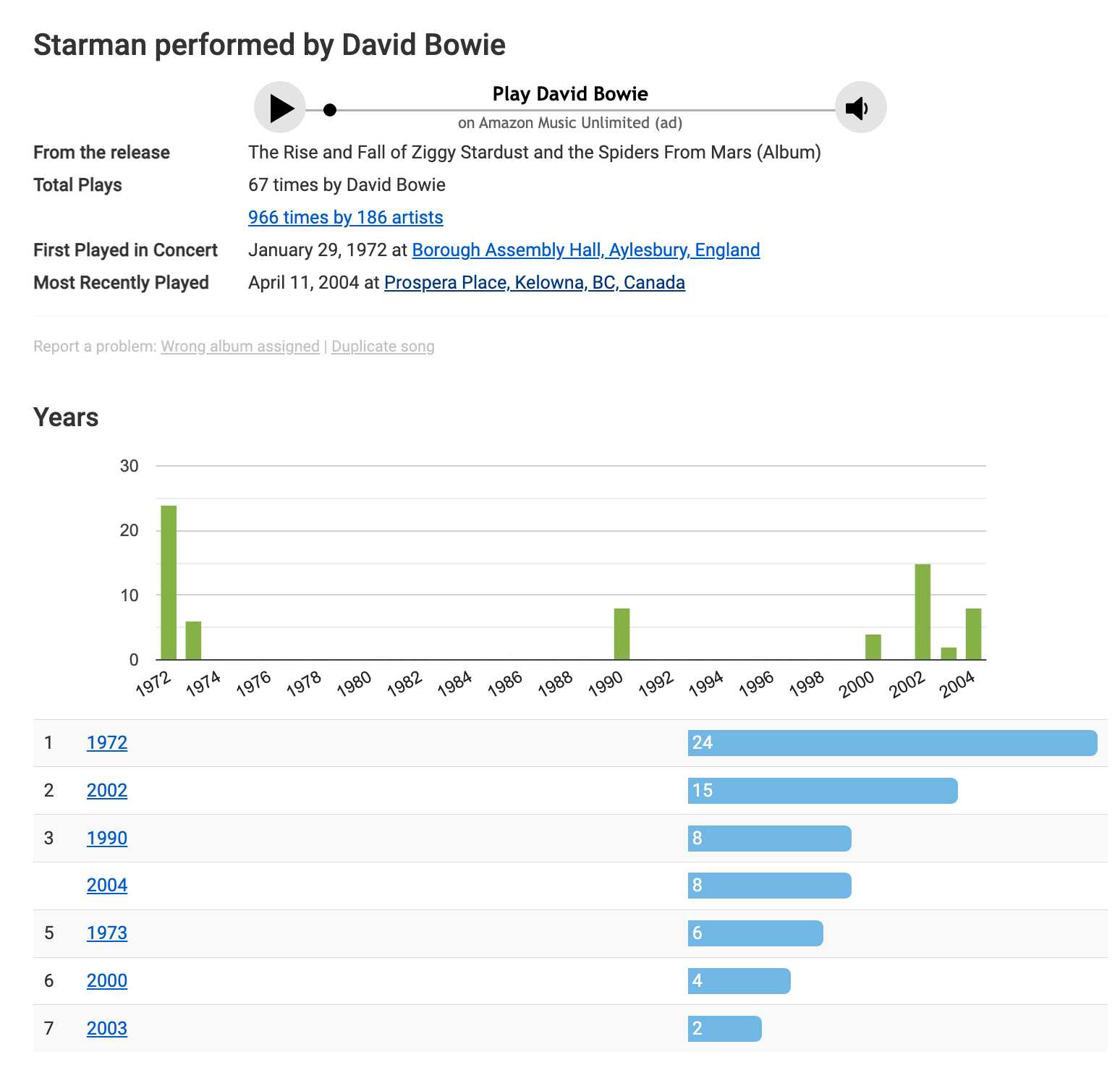
It was performed at just 30 of the 190 gigs of the Ziggy Stardust Tour and then never again until eight times in 1990 during this greatest hits Sound + Vision Tour, and then put on the shelf for another decade. Speaking of greatest hits, it also wasn't included in ChangesOneBowie, his best cuts from 1969–1976.
How could a song whose performance blew away the TV watching 15 year-olds Gary Numan and Siouxsie Sue get so casually tossed into the junk drawer?
Bowie wasn't into it. He wrote and recorded it to be a hit single, not a part of the album. But one of the suits at RCA saw it for what it was and insisted it go on Ziggy Stardust.
Fortunately the powers that be had cameras ready for the final Ziggy Tour date at the Hammersmith Odeon in London and that last show was recorded beautifully for the concert video, Ziggy Stardust: The Motion Picture.
At the sold-out gig, Bowie tells the crowed "it's the last show we'll ever do." Some took that as meaning he was retiring. Some believed he would be breaking up the band.
Even Bob Dylan ran into him and told him retiring would be a poor choice.
Fortunately Bowie just meant there would be no more of the Ziggy persona. And he was a man true to his word. There was never a reunion show or an anniversary concert. Bowie simply continued to evolve as an artist and a person.
In 2022 filmmaker Brett Morgen painstakingly pieced together the spectacular documentary about Bowie named after a song on Ziggy Stardust, "Moonage Daydream."
It's streaming now on HBO aka MAX.